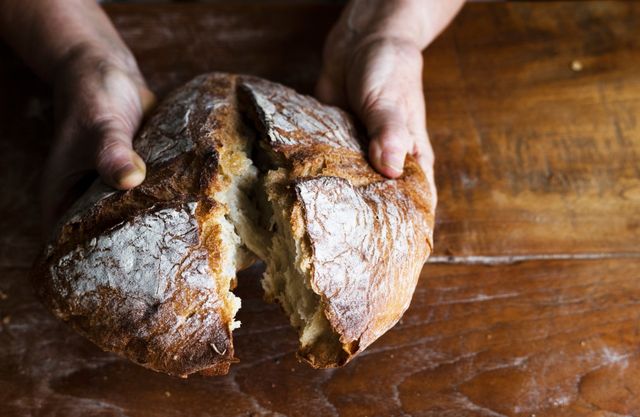
Scoring is often seen as the baker's signature—a way to make a loaf uniquely beautiful. However, in the world of sourdough, scoring is a vital functional step. Without a strategic path for the gases to escape, the bread will find its own way out, often resulting in "blowouts" at the weakest points of the crust.
The Tools of the Trade To achieve a clean cut, you need a very sharp edge. Here is what we recommend:
The Baker's Lame: A specialized tool holding a double-edged razor blade.
Straight Blade: Best for vertical cuts and basic sourdough batards.
Curved Blade: Essential for creating the "ear" (grigne).
Kitchen Scissors: Great for "snip" patterns on high-hydration rye breads.
Fresh Razor Blades: Always ensure your blade is clean; a dull blade will "drag" the dough instead of cutting it.
Technique: Depth and Angle The angle of your blade changes everything. If you cut straight down (90° angle), the bread will expand upwards and outwards equally. If you cut at a shallow angle (30°), you create a flap of dough that peels back during the bake, forming the coveted crunchy ear.
Common Mistakes to Avoid:
Scoring too deep: This can cause the loaf to collapse rather than expand. Aim for 0.5cm to 1cm depth.
Hesitation: Fast, confident movements are key. If you go slow, the dough will stick to the blade.
Warm Dough: It is much easier to score dough that has been cold-proofed in the fridge. The skin is tighter and less sticky.
Pro Tip: Use a light dusting of white rice flour on the surface before scoring. This creates a high-contrast look between the dark crust and the white floured patterns.